|
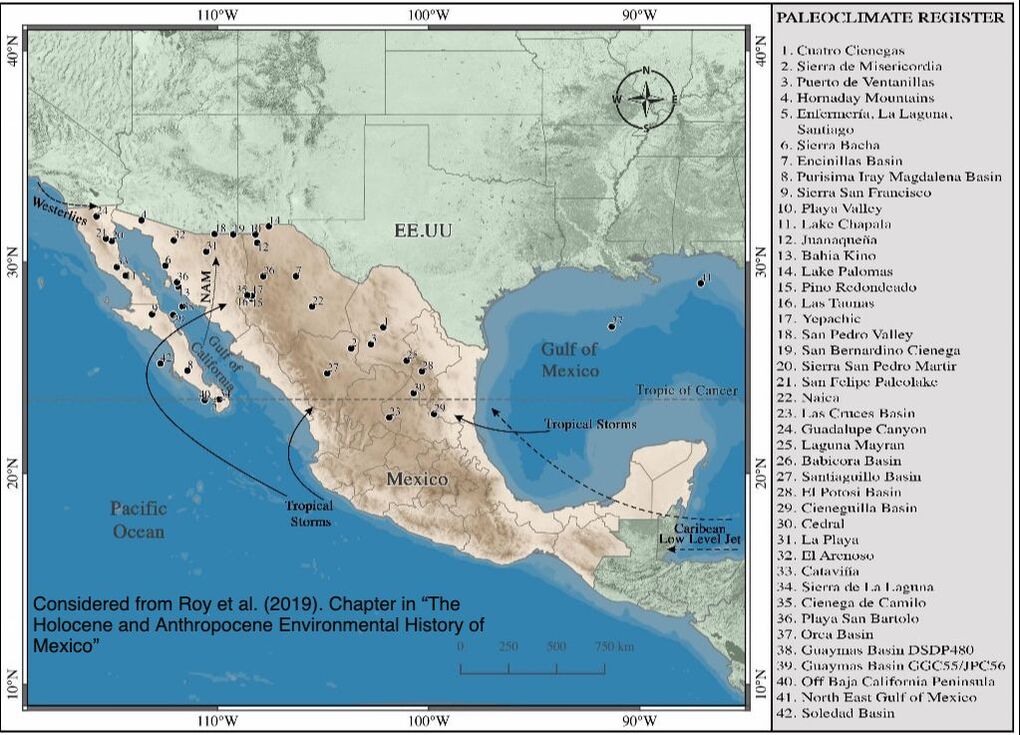
The northern part of Mexico is mostly arid and semi-arid, and it hosts large parts of the Chihuahuan and Sonoran Deserts. The water scarce and drought-prone regions are located in the rain shadow regions of the Sierra Madre Oriental and Sierra Mare Occidental with elevations of >3000 m asl. Recent scientific observation led to an ongoing debate that the global warming would further enhance the frequency and intensity of droughts in this arid region in the near future that covers almost one third of the national territory of Mexico due to the combination of higher temperature and lower rainfall. Occurrence of more frequent droughts would affect the socio-economic conditions of people living in this region by affecting the agricultural yields.
|
|
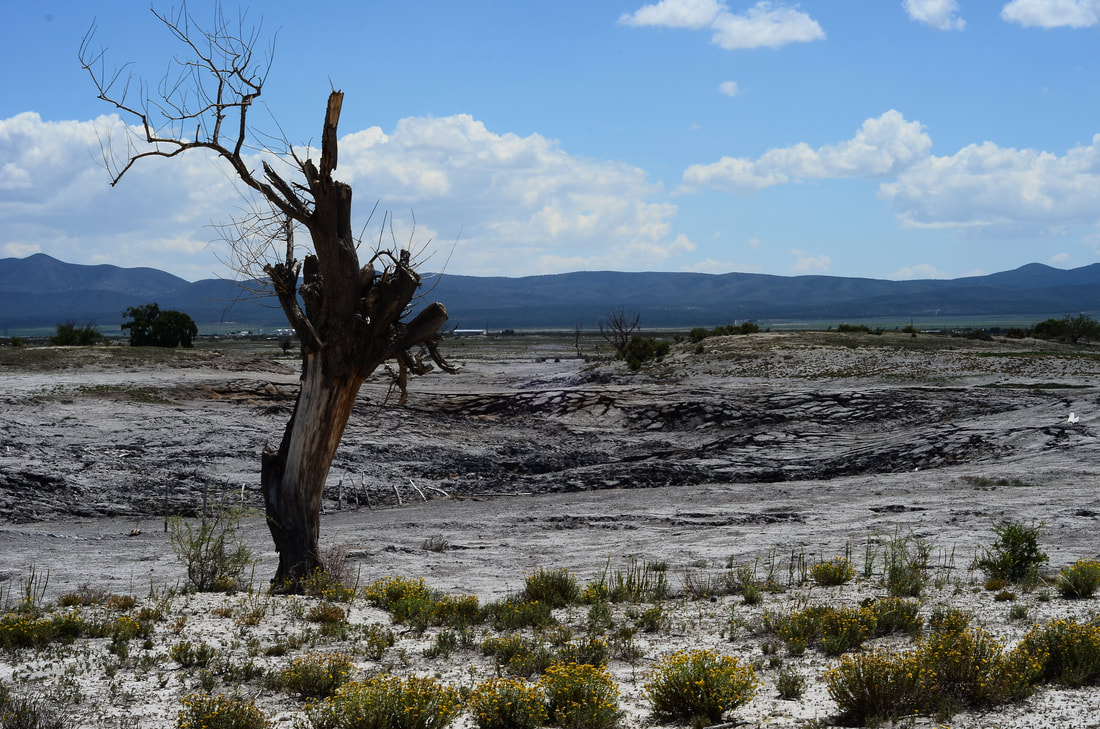
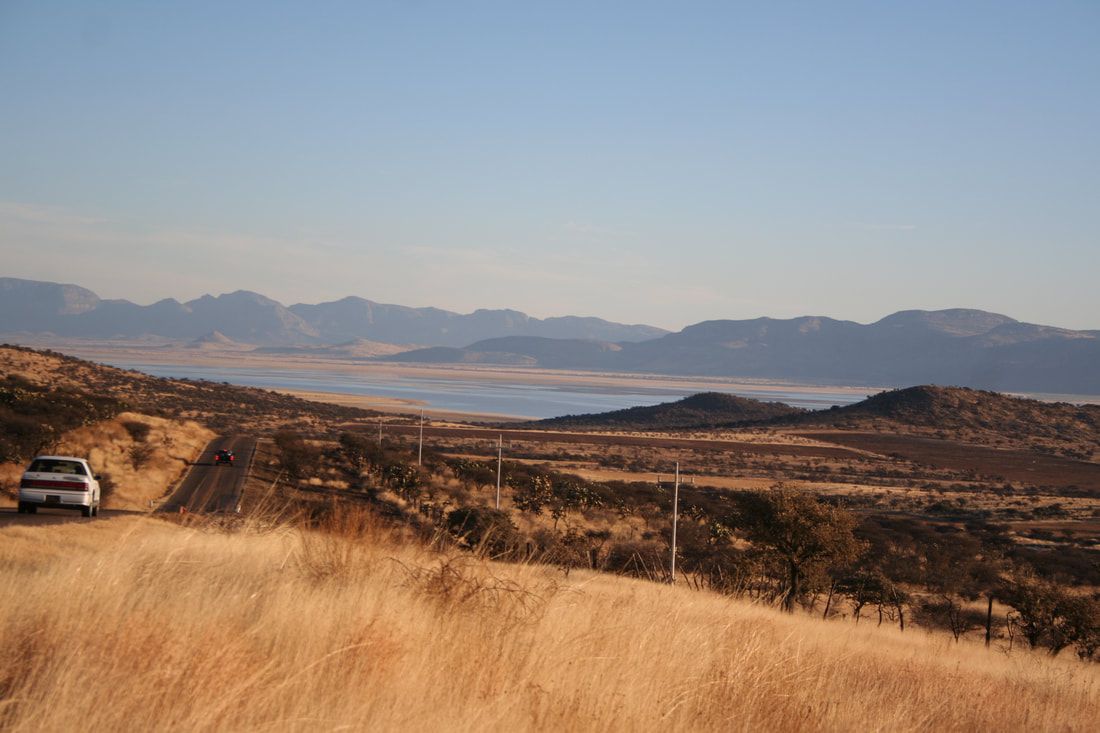
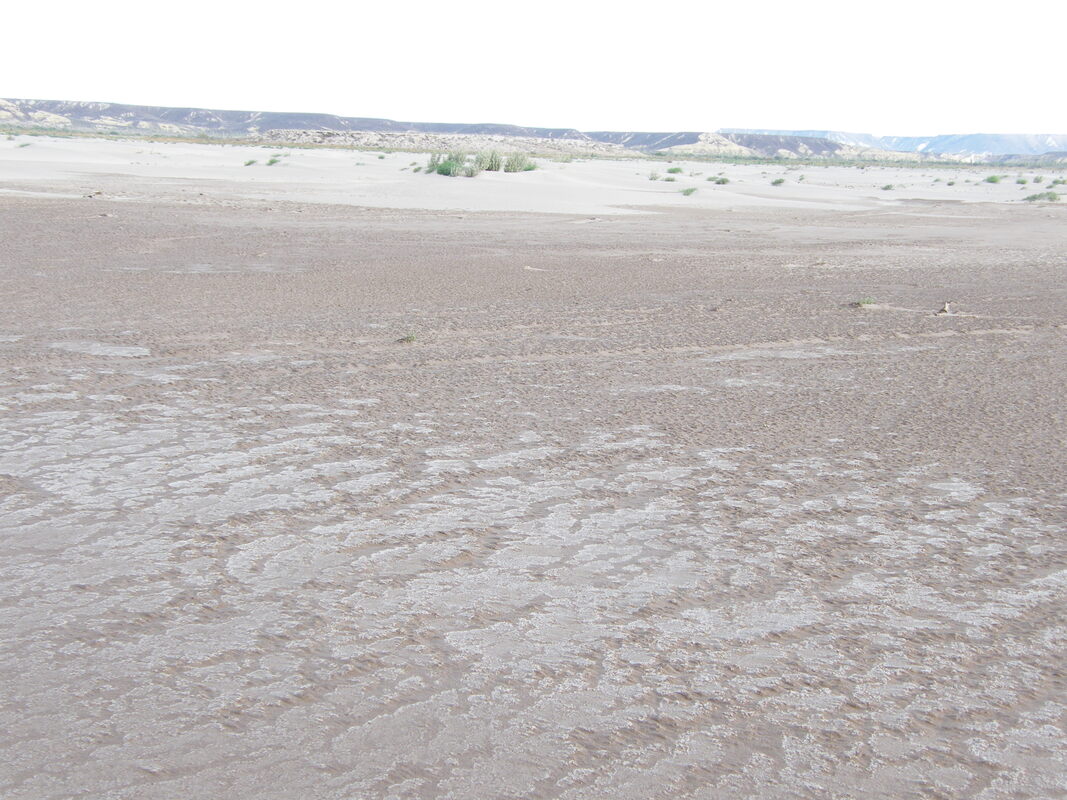
Modern meteorological data separate this region into four different parts, i.e. northeast (NE) Mexico, Monsoon region, Desert and South Baja. The regions of Desert and South Baja (mostly restricted to the Baja California Peninsula and Sonora state) are more arid compared to the Monsoon region (adjacent to the Sierra Mare Occidental) and NE Mexico. Landscapes and water budget of lacustrine basins mirror this meteorological division. Dry lakes and evaporite duricrusts are common in the Desert and lakes in the Monsoon region have perennial and ephemeral shallow water column. Even though the NE Mexico is relatively wetter, the over-extraction of groundwater for agriculture in industrial scale over the last couple of decades has dried the lacustrine basins and the drastically lowering groundwater tables caused subsidence.
|
|
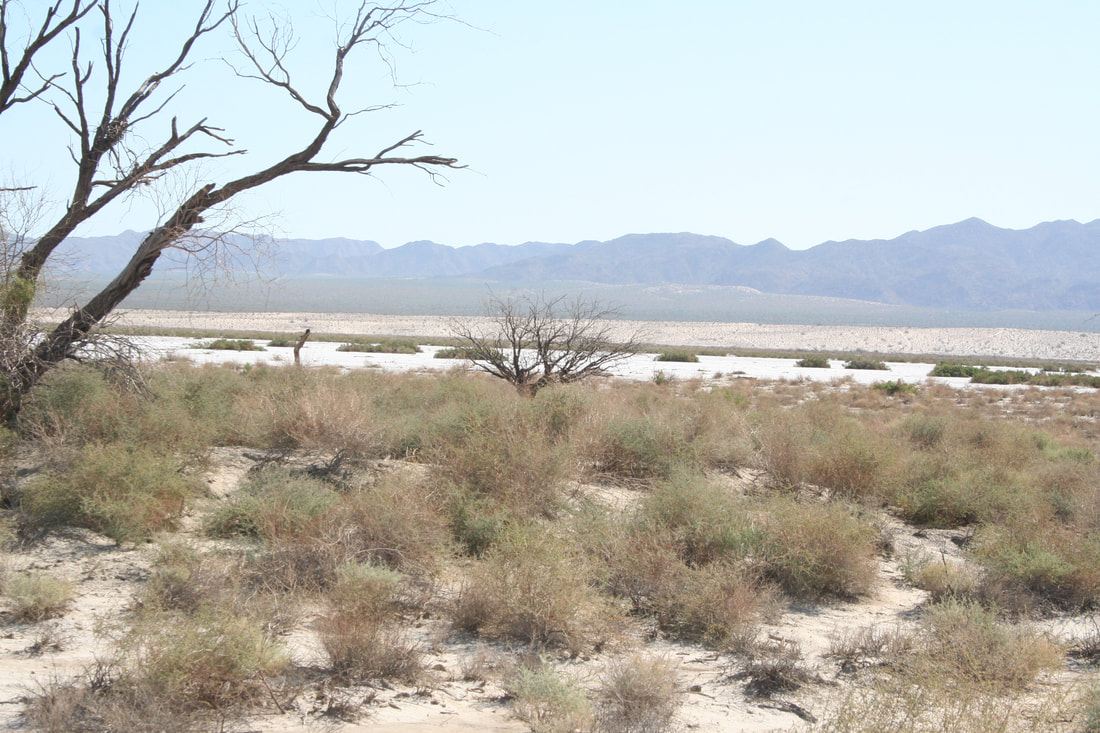
Modern meteorological data separate this region into four different parts, i.e. northeast (NE) Mexico, Monsoon region, Desert and South Baja. The regions of Desert and South Baja (mostly restricted to the Baja California Peninsula and Sonora state) are more arid compared to the Monsoon region (adjacent to the Sierra Mare Occidental) and NE Mexico. Landscapes and water budget of lacustrine basins mirror this meteorological division. Dry lakes and evaporite duricrusts are common in the Desert and lakes in the Monsoon region have perennial and ephemeral shallow water column. Even though the NE Mexico is relatively wetter, the over-extraction of groundwater for agriculture in industrial scale over the last couple of decades has dried the lacustrine basins and the drastically lowering groundwater tables caused subsidence.
|
Research leader:
Dr. Priyadarsi D. Roy Paleoenvironment and Paleoclimate Laboratory Institute of Geology, National Autonomous University of Mexico (UNAM), Mexico City, CP 04510, Mexico Email: roy@geologia.unam.mx |
This webpage presents general information about the past climate changes over the last two epochs of earth’s history (i.e. Pleistocene and Holocene) and covering around 100 thousand years in the past mainly from lacustrine sequences. Most of this information were generated by our research group with financial supports from Conacyt (Ciencias Básicas), UNAM (DGAPA-PAPIIT) and in collaborative grants with UT system (ConTeX). We have also used important results of studies by other experts (limited speleothem, paleosol and sand dunes) to provide a comprehensive idea of the state of the art of paleoclimate research in northern Mexico (including 43 sites).
We will also be uploading information from other sites of Mexico where we are presently working. |